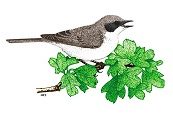
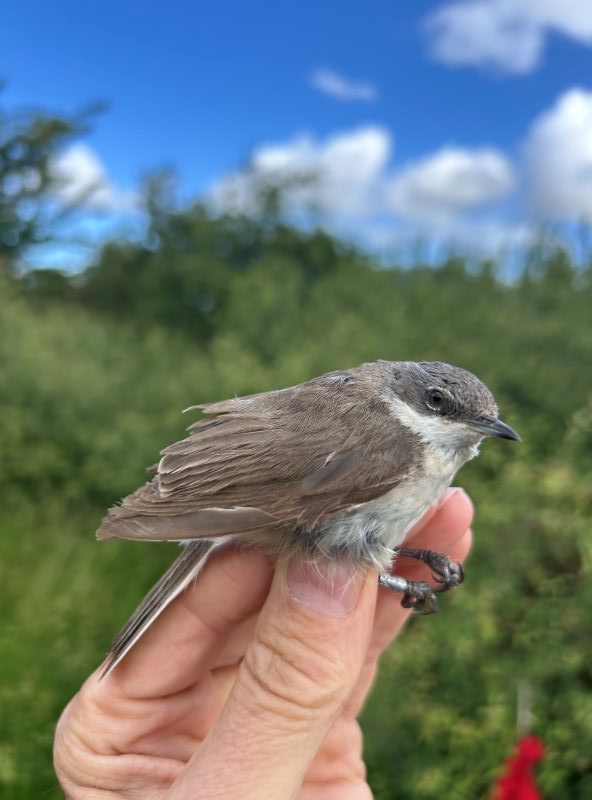
The Lesser Whitethroat (Curruca curruca) is one of our rarest breeding birds in Renfrewshire and is only found in open mature thorn scrub. This habitat is also rare in Renfrewshire, but large areas of good quality thorn scrub are present in Brownside Braes, Paisley. Historically, Lesser Whitethroats have held 1-2 territories in the main breeding site at Brownside Braes from 1984 – 2003. Unfortunately Lesser Whitethroats have disappeared from this site since 2005. The Local Biodiversity Action Plan (LBAP) steering group formed by Renfrewshire, East Renfrewshire & Inverclyde Councils decided to safeguard this species by implementing a Species Action Plan (SAP). This SAP provides a framework to monitor the Lesser Whitethroat and set about objectives to deploy a Scrub Enhancement Project for Lesser Whitethroat at Brownside Braes.
This project was one of the first of its kind in Scotland due to its premise of creating new thorn scrub habitat by planting Hawthorn, Blackthorn, Gorse, Goat Willow, Dog Rose & Bramble. A pasture field 3 hectares in size and owned by Renfrewshire Council was given to the project. Renfrewshire Environmental Trust funding was obtained and in the Winter of 2007/8 various community groups planted hundreds of hawthorn & blackthorn in 15x30m blocks shaped in semi circles and south facing. Planting of gorse, dog rose, bramble to form the nesting understory was planted in the Spring of 2014.
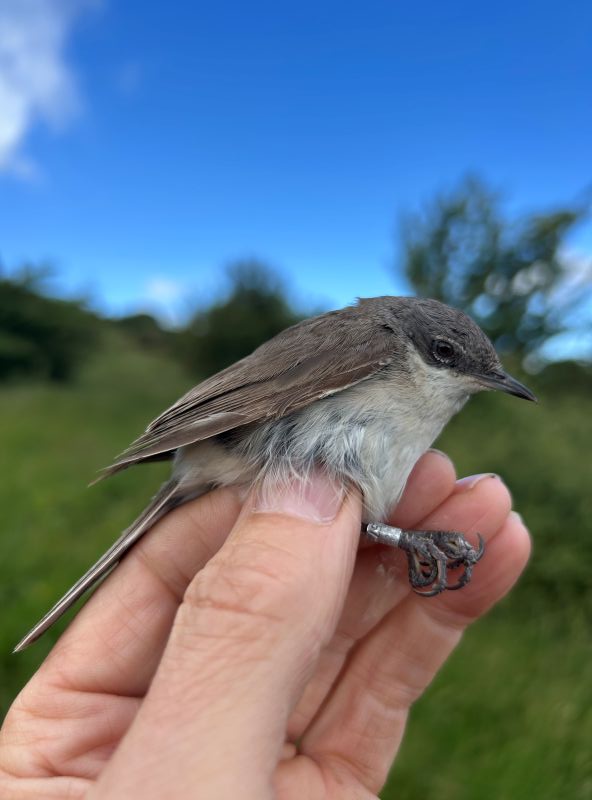
This site has been annually monitored every Spring by the Paisley Natural History Society (PNHS) and after 18 years, in May of 2026, to our amazement, two singing Lesser Whitethroat were holding territory in the project site.
Tom Byars, Chair of PNHS said “This is the first recorded instance of Lesser Whitethroat occurring in pre planted habitat in Scotland, proving that the planting regime worked in providing suitable habitat for the species. All involved parties are delighted with the project’s success not only for the Lesser Whitethroat but increasing biodiversity in general.”
Visit the Lesser Whitethroat page for further information about this project.


This is very cheering and illustrates what can be done
pauline & angus wood
LikeLike
This is v good news- well done to all involved Pauline & Angus Wood
LikeLike
Wonderful cheering news. Well done to all involved!
LikeLike