
Offer of Zoom sessions and short outings
Following the talk he gave for PNHS in November, Craig Postlethwaite has offered to run a few short zoom calls to show common lichens and the relevant identification characteristics from the Field Studies Council guides e.g. terminal soredia on Parmelia sulcata. He could then follow up with a short outing to a local park or LNR where people can work through the guides with some help from Craig. If anyone is interested they can email paisleylichens@gmail.com, suggesting days and times to avoid so he can sort out something to suit.
Weather permitting, Craig is also leading a Lichen outing for PNHS at Muirshiel Country Park on Saturday 27th January. See the outing page for further details.
Beginners id guides
Dave Mellor is creating a series of short identification guide to selected
groups of lichens in the Renfrewshire area. The first is on bushy lichens.
Easy guide to lichens 1. Bushy Lichens
Dave has been studying lichens (on and off) for about 40 years and has observed the shift in distribution and growth of these species.
It is interesting to realise that these plants famous for being very slow growing are showing signs of ‘blooming’. When you look at the new growth spreading on young tree branches it is a bit heartening to know that clean air legislation from some decades ago has now produced some tangible results.
What you can do
Dave asks:
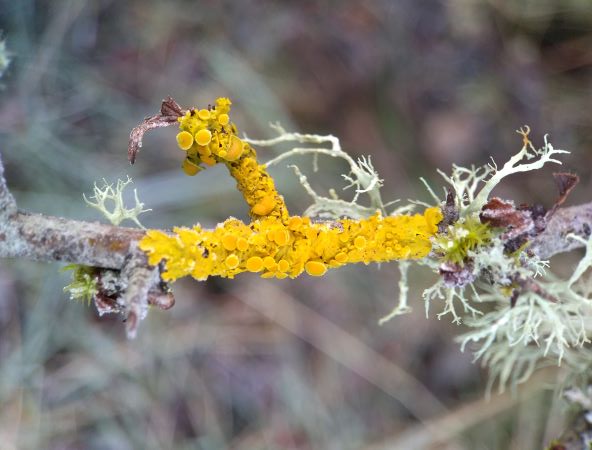
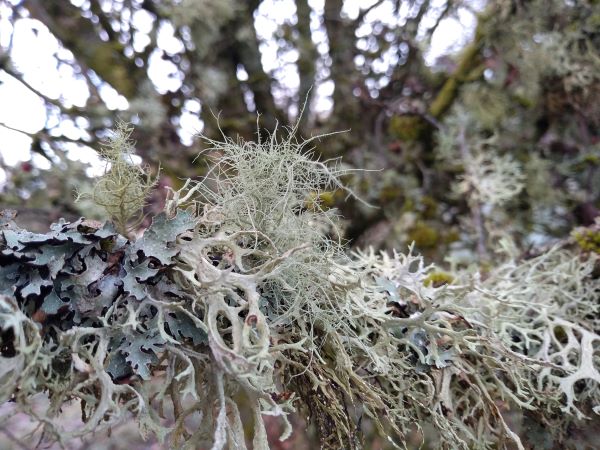
When you are out and about it would be helpful if you could record some of these species, in my opinion it is harmless if you collect some specimens to assist with identification and learning. Also, if possible, take photos of trees with species rich branches as per the photograph. Send them to renfrewshire.wildlife@gmail.com with a grid ref etc. and we’ll see what we can make of them.
I use iRecord to keep my records, if needed you can add photos to get help in confirming the species. the records are available locally for others to see and get encouragement from. When I’m ready to send records to the British Lichen Society, I can easily extract them and send them off. Otherwise, keep specimens in small envelopes or folded papers. So long as they are dry they will keep for decades. Of course, note the locality, habitat, date, identification features and
your name.
I’ll be producing a few more of these guides for anyone interested. I
hope you can print them out and keep them in your field notebook or
somewhere. Next will be some leafy grey or brown species. in the Parmelia group.
Dave Mellor
 Paisley Natural History Society
A really good ID for local use.
Will definitely try to record some on walks around d Neilston
Pauline
LikeLike
Thanks Pauline. We’d love to know how you get on.
LikeLike