
Introduction
The general area occupying undulating and slightly elevated land to the the south of Paisley is part of the Gleniffer Braes. As can be seen from the soil map below there are substantial areas of peatland within this area. Some are intact and some degraded or afforested.
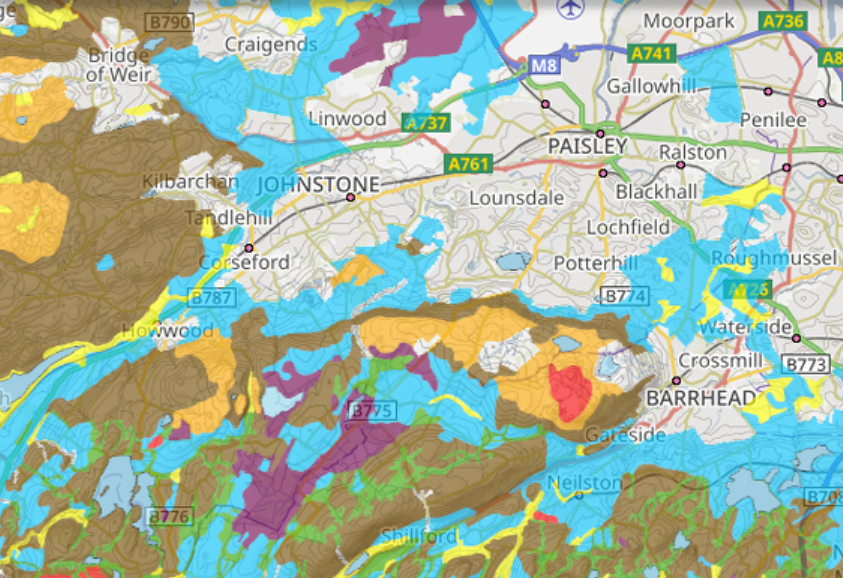
This map from the Scotland’s Soils website shows the distribution of peatlands (purple) in the Gleniffer Braes area.
blue – clayey soils (gleys with a drift origin)
green – clays with a peaty element
brown – ‘brown soils’ with a drift component
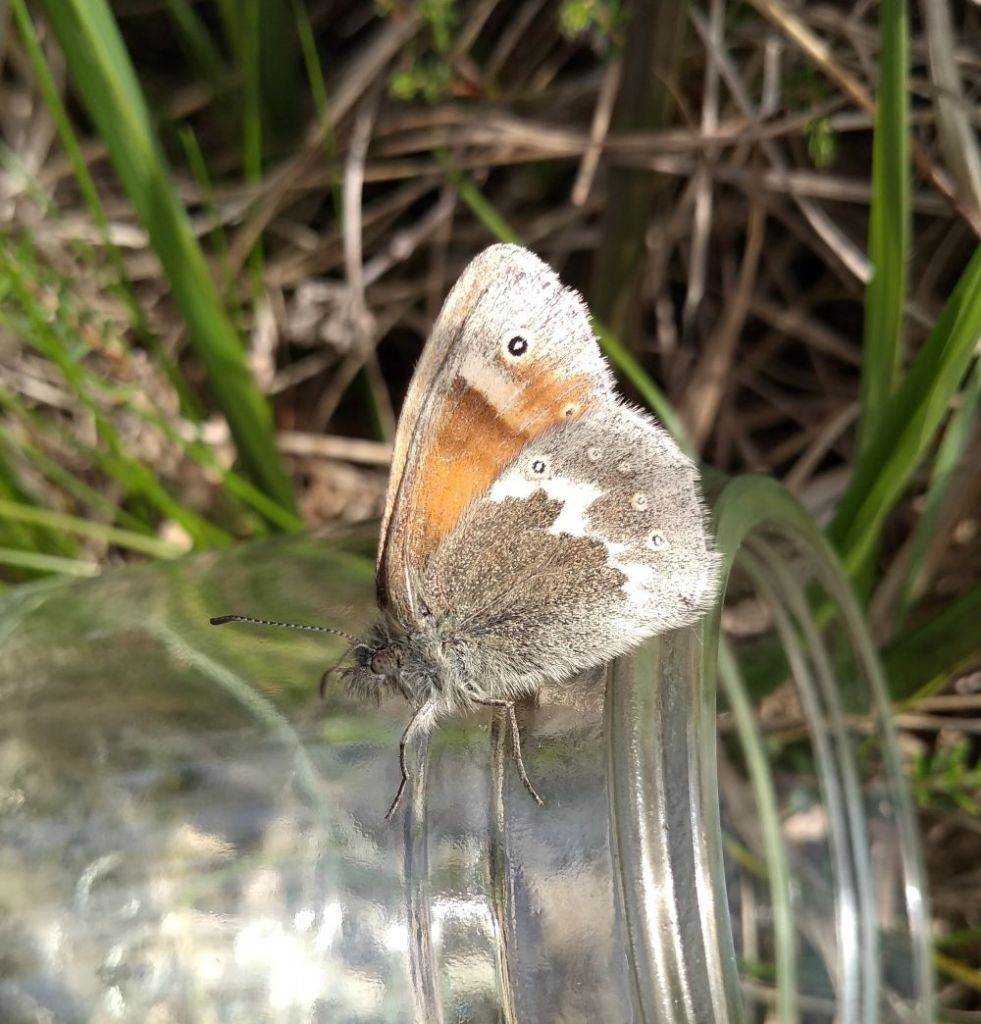
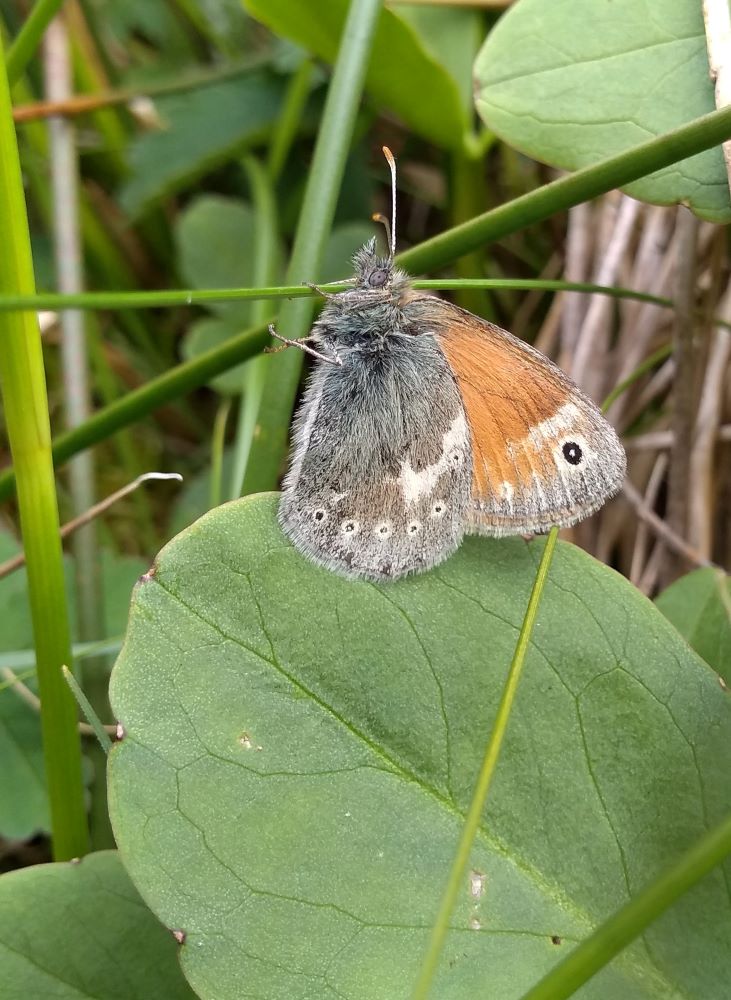
Over the the summer of 2022 a brief examination of this area was made by Paisley Natural History Society members Dave Mellor, Gordon Philips and Kirsty Menzies, to look at remnants of the peatlands for general condition and, in particular, for the Large Heath butterfly (Coenonympha tullia) as part of Butterfly Conservation’s 2022 Scottish survey of this species. Our field notes were submitted to the survey scheme and butterfly sightings added to iRecord Butterflies.
This note is a summary of the current position that was found regarding the extent and stability of the remnant areas of peatland which, as can be seen from the soil map, were once quite extensive.
2022 Survey sites
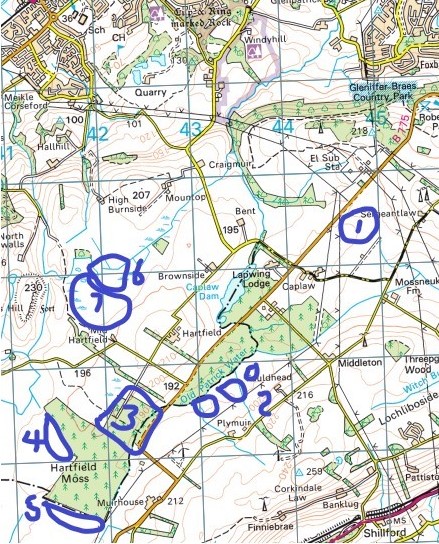
- Sergeantlaw Moss raised bog
- Newfauldhouse raised bog
- Hartfield Moss
- Hartfield Moss remnant
- Hartfield Moss remnant
- Whittliemuir raised bog
- Midton Loch area
1. Sergeantlaw Moss raised Bog
This is a recognised wildlife site (SINC) and has a large area of good condition peatland. It has had conservation work carried out in recent years to remove tree seedlings and saplings. The roadside wet woodland strip has additional interest, including Royal Fern and Coralroot Orchid which have been recorded in the past, though neither have been seen in recent years. However, an isolated young plant of Royal Fern was found at nearby Whittliemuir Dam in 2021 which may possibly have been seeded from the Gleniffer bog.
2. Newfauldhouse raised bogs
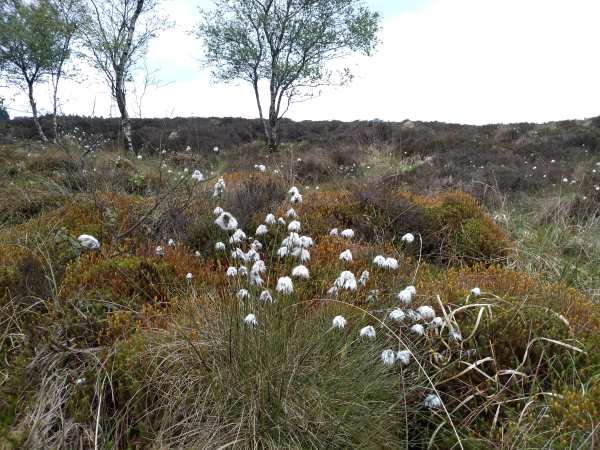
Three areas of raised bog, separated by small drainage depressions, were identified as areas of interest by Keith Watson (BSBI Recorder for Renfrewshire vice-county) during a phase one survey of many years ago, but have not been studied properly since. Large Heath butterflies were found in summer 2022. These areas seem to have well developed raised bog vegetation as do similar bog sites in adjacent areas. The total area of bog is approximately 7 hectares.
3. Hartfield Moss clear areas
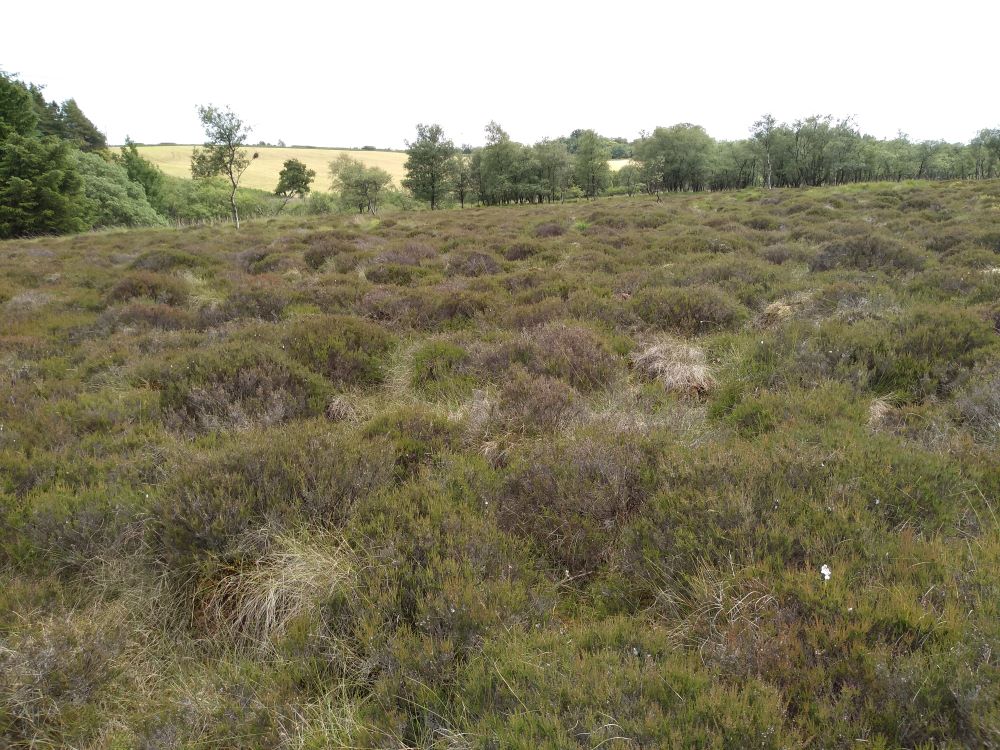
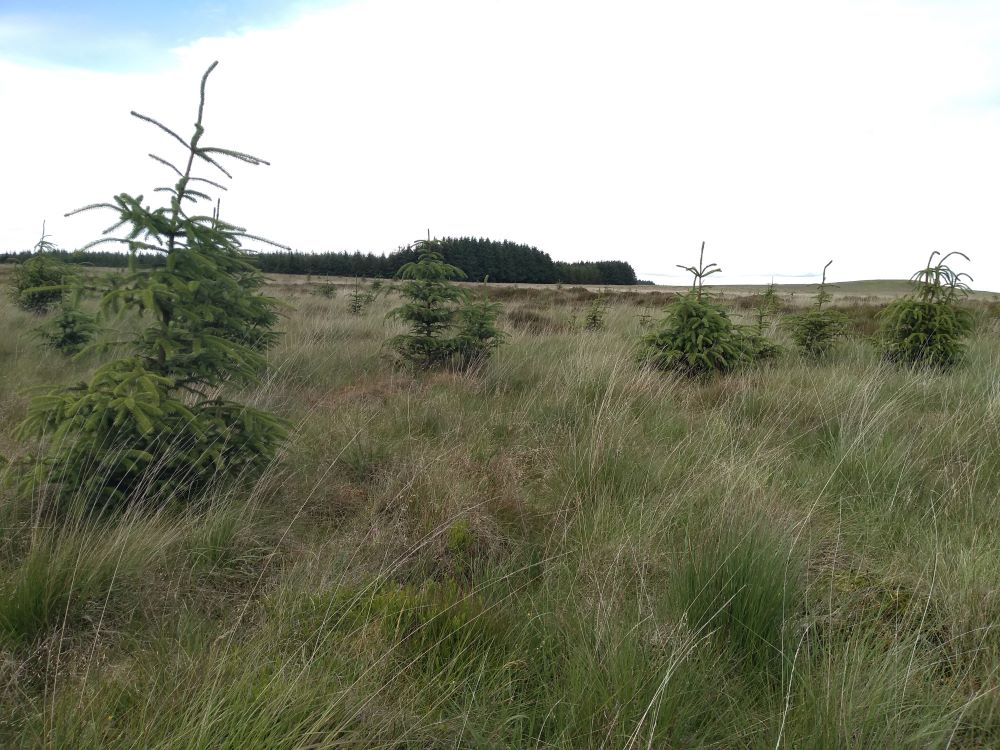
Large parts of the original peatland areas across the Gleniffer area have been planted with conifers over recent decades, with associated drainage and soil disturbance. Part of this area (approx. 26 hectares) was recently cleared felled and so could be conveniently restored as a peatland area.
4. and 5. Hartfield Moss remnants
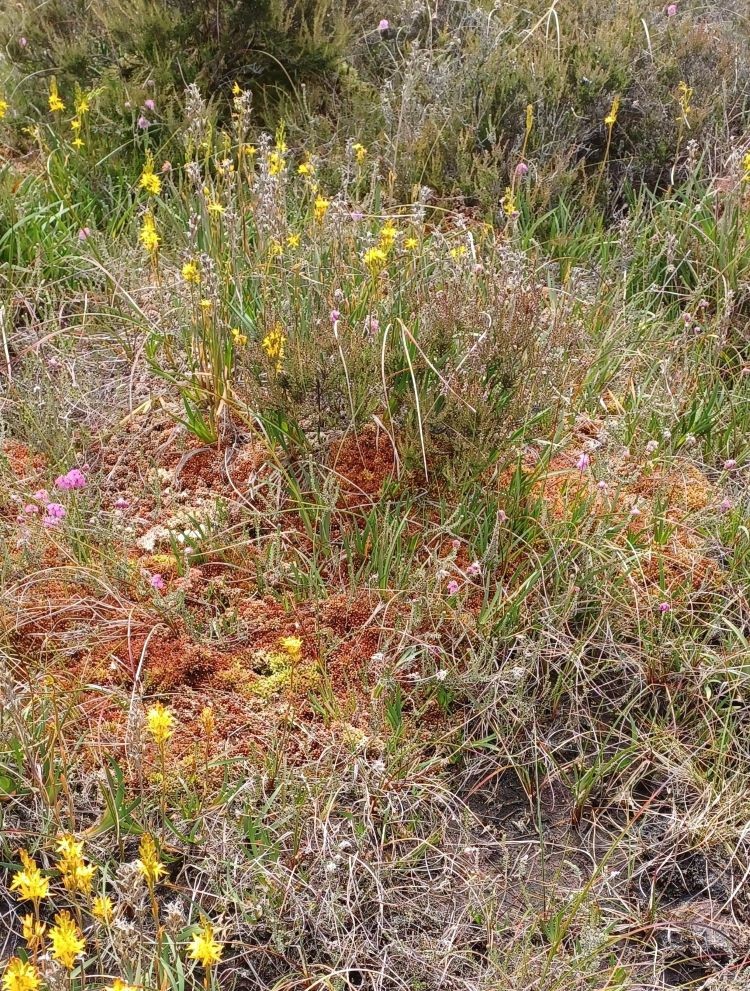
These two areas were part of the original extensive Hartfield Moss but appear not to have been planted, possibly due to different land ownership. They both have well developed peat bog vegetation and again both sites had Large Heath butterflies present as an indicator of good quality habitat. Both areas are affected to some degree by the drainage system which drains the adjacent conifer planted area.
6. Whittliemuir raised bog
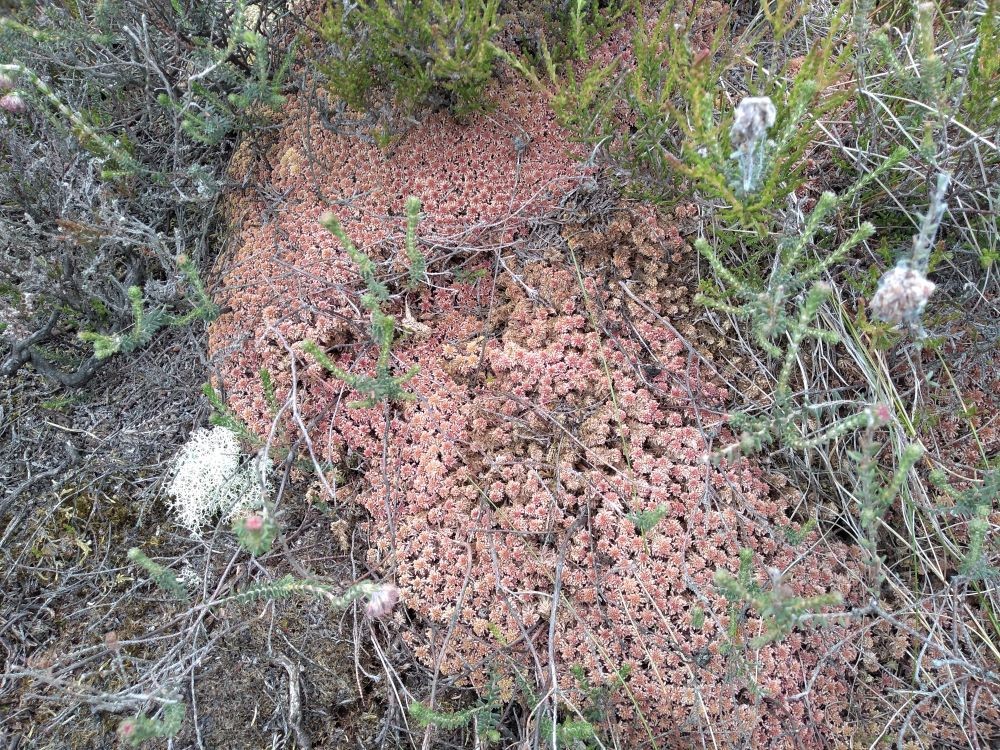
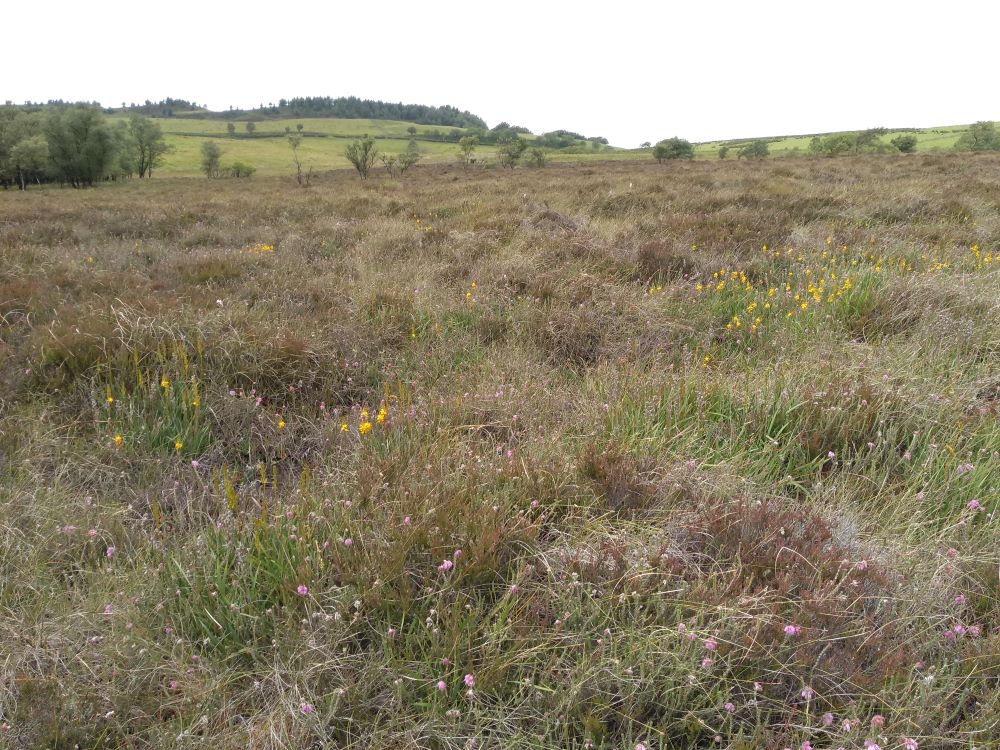
This is also a recognised wildlife (SINC) site, comprising an area (approx. 28 hectares) of well developed raised bog. It is most probably a surviving remnant of a much larger area of peatland which existed before large scale peat extraction of previous times (possibly 19th century). This extraction led to the formation of Midton Loch which existed at this location until it was drained some 30 years ago. Due to this drainage, the southern edge of the raised bog has become subject to increased drying out and whilst this appears to affect a relatively small area of the bog, the impact can only be to progressively expose the peat to drying out and oxidation. The Large Heath butterfly was not found at this site (probably due to limited visits and weather conditions) but the suitable habitat and proximity to nearby sites suggests it is a very likely site for the species.
7. Midton Loch area
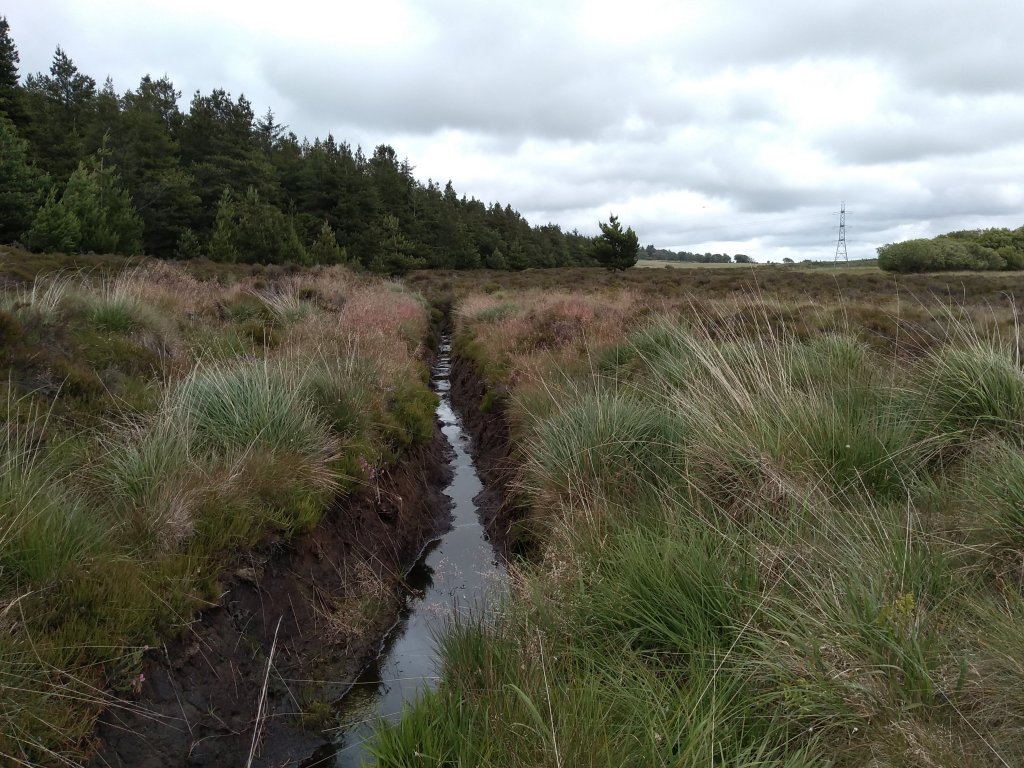
This site (approx. 23 hectares) was exposed following the draining of the reservoir some 30 years ago. At that time there was a plan to use the site for landfill but this did not materialise and it has remained as a wetland. Over the period it developed a varied and interesting ground cover but the large drainage channel excavated around the northern and western sides (cross section approx. 3m wide and 2m. deep) is causing drying out and so facilitating tree cover development along the adjacent areas. It would be easy and inexpensive to block this drainage and return the area to an active bog. Attempts to contact the owners were made a couple of years ago, by Renfrewshire Council and others, but were unsuccessful.

Summary
It is evident that quite a large area of peatland survives in the wider area of Gleniffer/Hartfield and has good potential for peatland protection and enhancement. The areas identified in this note are all either peatlands in ‘good condition’ or capable of being restored.
Dave Mellor
 Paisley Natural History Society
It’s really good to read that local peatlands , even though they are remnants, are in good condition or still capable of being restored.
Pauline
LikeLiked by 1 person
Thanks Pauline. It is good to see and hopefully we will never see future forestation or drying out of these areas as has been done in the past.
LikeLike