Want to know the difference between a Large Heath (Coenonympha tullia) and other similar species or to learn more about them and the best way to survey for them? Then take a look at the series of free workshops being run by Butterfly Conservation as part of their Large Heath Scottish survey 2022.
The adult butterflies fly from mid-June to mid-August on lowland raised bog, upland blanket bog and damp, acid moorlands where their caterpillar food plant, Hare’s-tail Cottongrass is found. Due to the difficult, boggy terrain, this butterfly is under-recorded but it is known to be in decline due to loss of this habitat to drainage, peat extraction and forestry.
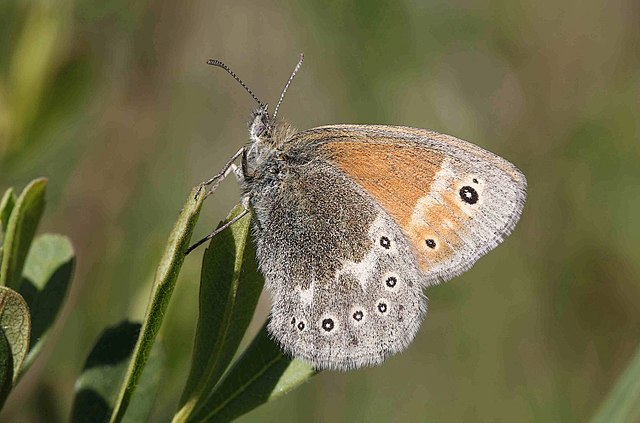
The workshops will introduce Large Heath and its ecology as well as running through the survey method. They aim to encourage volunteers to take on a local bog to survey for the Large Heath.
- Online workshops (recording will be available afterwards):
- Monday 6th June, 7.30-8.30pm
- Thursday 9th June, 7.30-8.30pm
- Field workshops:
- Saturday 25th June, West Linton, 11-2.30pm
- Saturday 2nd July, East Kilbride, 11-2pm
Further information on the survey and booking for workshops can be found here.
Butterfly Conservation are looking for volunteers to help survey priority sites. This will help to build a picture of how the butterfly is faring in these habitats and help plan their bog restoration activities. So why not give them a hand? Records from other sites with Large Heath populations are also welcomed. There are a few records for Large Heath in Renfrewshire from a small number of sites including Greenock Cut and Windy Hill in Clyde Muirshiel Regional Park; Sergeantlaw Moss, Gleniffer Braes; and Whitelee Windfarm. It would be useful to add to these records and see how the Large Heath is faring locally. So if you are out and about and spot any be sure to record them and let us know what you’ve seen.
 Paisley Natural History Society