
6 July 2024
The weather looked promising as we made our way to the eastern Loch Lomond banks for the postponed Cashel Forest trip. Although the temperature was rather low for July, it proved to be a lovely day with only a short shower at lunch time. Society members were treated to a tour of the site by Simon Stuart who previously worked at Cashel Forest, and his passion for Cashel was infectious and his knowledge inspiring.
Simon explained Cashel’s beginning as a sheep farm part of a much larger estate, before part was sold as a forestry plantation as the steep ravine made farming difficult. Today, Cashel is owned by Cashel Forest Trust, supported by a grant from the Millennium Forest for Scotland project to purchase it in 1995. Some 300 hectares are native broadleaved woodlands, with around 24 hectares dating to around 1800. Well maintained paths mean this area is accessible and makes a delightful walk, a further 900 hectares are open moorland where some peat restoration is underway.
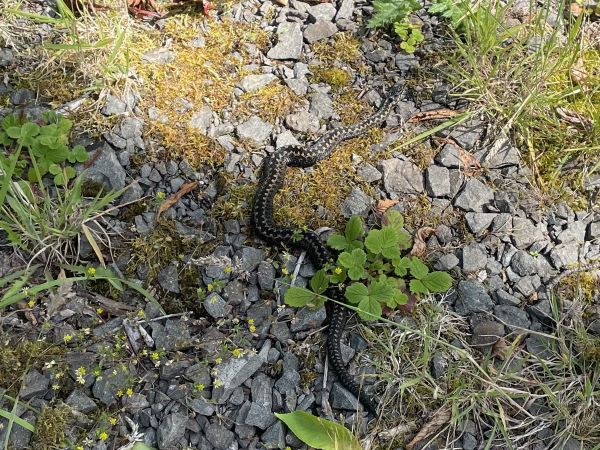
No less than ten minutes from the car park an Adder was spotted which I think was the trip highlight for most of the group. Patches of rocky ground and short turf are fantastic Adder basking as they catch the sun’s rays, meaning the Cashel Forest is a stronghold for the rare Adder. Judging by the size and colour, this Adder is likely to be a young female. Adders give birth to live young and they have the most northernly range of any reptile species globally.
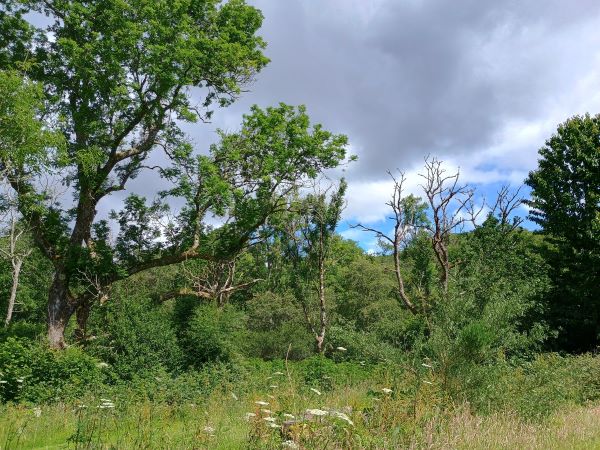
Simon spoke about the plight of Britain’s ash trees, many of which are threatened with ash dieback, a fungal disease. Although present at Cashel, several trees are proving resilient and it was lovely to see several examples of large imposing ash trees. The trees were covered in many different species of lichens and moss, the dappled shade provided by ash leaves as well as the relatively high pH of ash tree bark, make the ash tree a favourite among several lichen species. Hopefully, the ash trees at Cashel will continue to flourish despite the threat of disease.
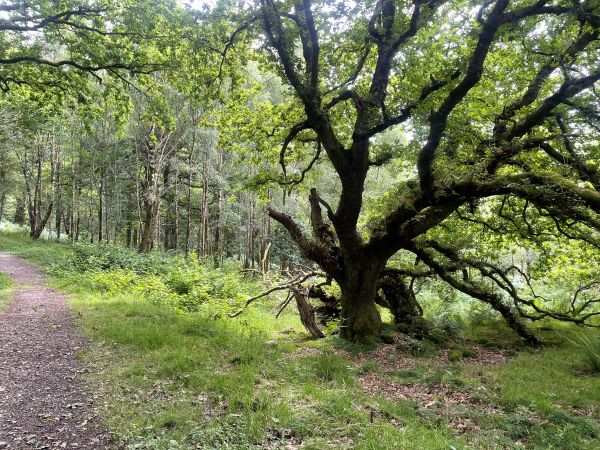
Cashel is home to a once champion crab apple tree, however, it is now known the tree is of hybrid variety so has been removed from the Tree Register Database. An impressive specimen nonetheless. Two large American Red Oaks also live at the site, while Common Cow-wheat and Heath Spotted Orchids were more examples of native flora seen. Although, common and often overlooked, a bramble bush was covered in a variety of pollinating insects including hoverflies, shield bugs and soldier flies. Although, jumpers were on, the insects were making the most of Scottish summer and out in force – including those annoying midges! More Smidge anyone?

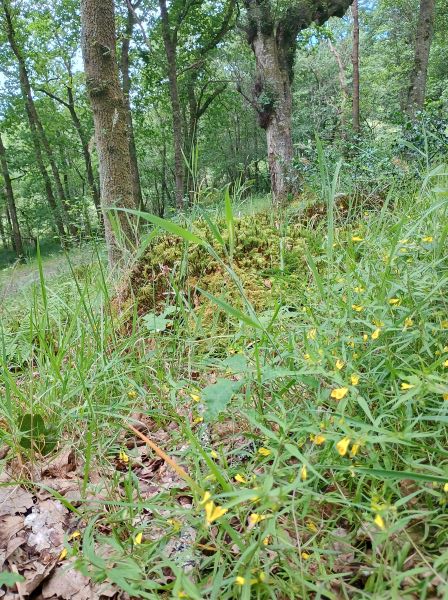
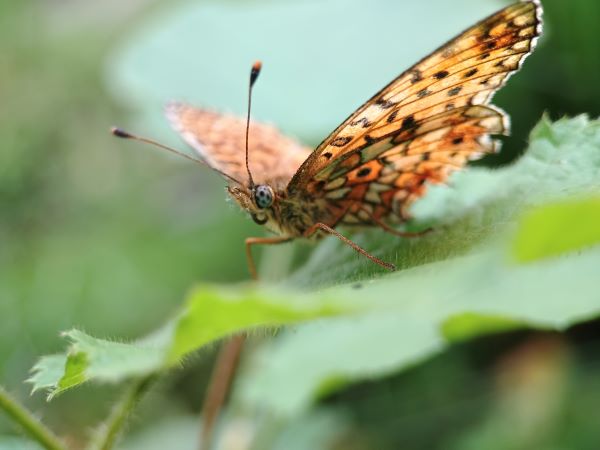
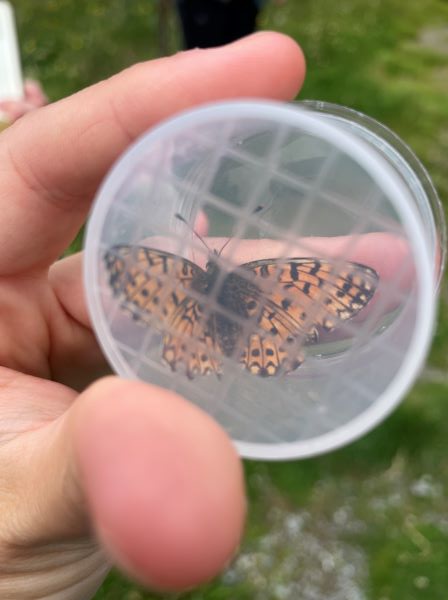
On the purple path, which winds upwards through Pedunculate Oak and Silver Birch woodlands, a Small Pearl-bordered Fritillary butterfly was seen in the long grass. Kirsty, caught the individual in a net and placed it in a pot. This allowed for much closer look, accurate identification and a chance to admire the beautiful markings of this butterfly. Cashel Forest is home to iconic Scottish mammals such as the Red Squirrel and Pine Marten. Although neither were seen, Pine Marten scat was found on paths, where Pine Martens have used their scat to mark their territory.
The pond, on the blue/red/black path, was our last stop before returning to the car park. Dragonflies and damselflies skimmed the surface while others were mating and laying eggs in the water. Species included Large Red and Common Blue Damselflies, a Common Darter and a Gold-ringed Dragonfly.
The trip was a lovely first time visit to Cashel Forest for some members, and for others gained a new insight to an already much-loved site. For me, it was 5th time lucky to see the infamous Adder on my visit. A big thank you to Simon for sharing Cashel’s hidden secrets and I hope it stays much the same in what looks like an uncertain future for the site.
Report by Megan Johnson
Photographs by Megan Johnson and Kirsty Menzies
 Paisley Natural History Society