22-23 June 2024
Fintry Bay
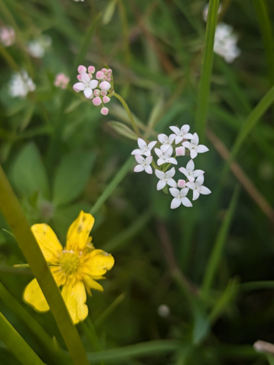
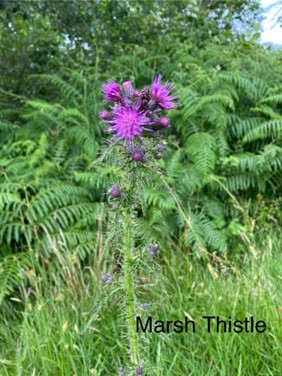
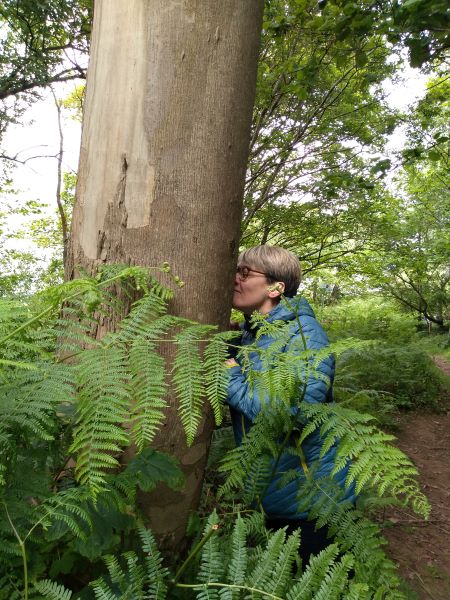
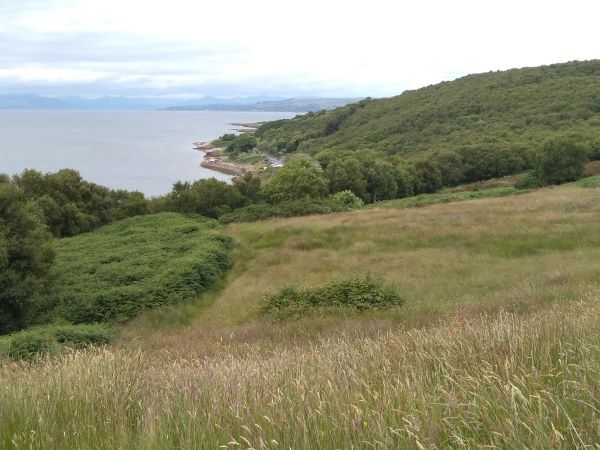
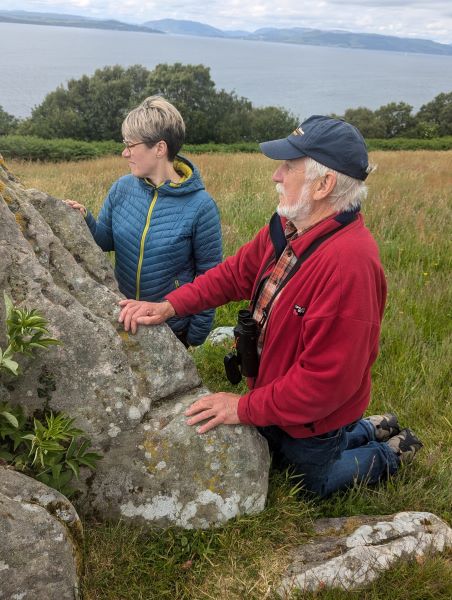
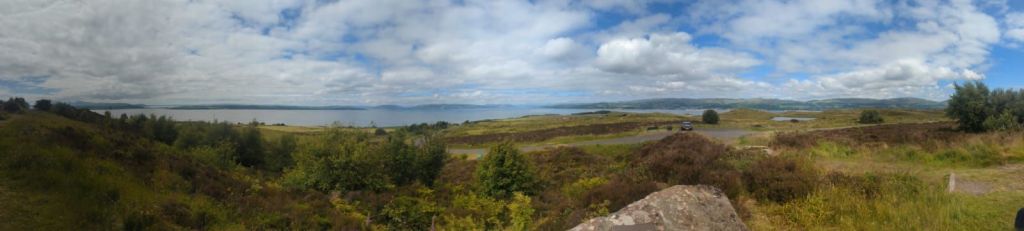
We arrived on the Isle of Cumbrae at lunch time and headed over to the Fintry Bay Café, with beautiful views over the Clyde Estuary. After a delicious lunch we made our way along the coast towards Millport and discovered the walking track uphill to Millport Golf Club. Our route took us up the hillside, tough a short stretch of woodland and on to open grassland towards the middle of the island, where we passed by the ‘Gowk Stone’, with views over to Bute and Arran. Going uphill, pausing to sniff the bark of a large eucalyptus tree, we noted Marsh Thistles (Cirsium palustre), Tormentil (Potentilla erecta), and Heath Bedstraw (Galium saxatile) beside the path.

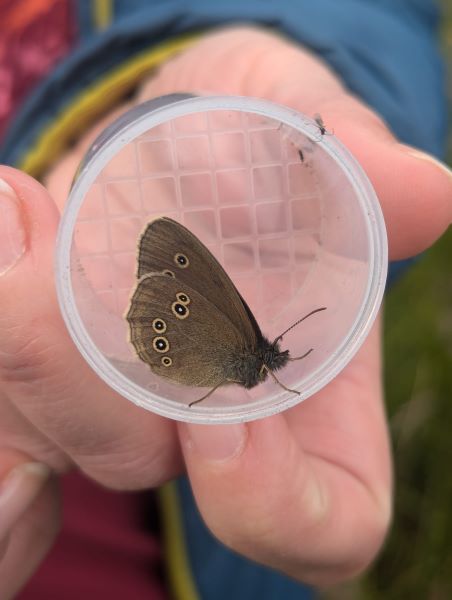
This is where we saw our first butterfly, a Ringlet (Aphantopus hyperantus), and managed to catch one to have a closer look at its distinctive ring markings. We also saw a Green-veined White (Pieris napi) and some Meadow Brown butterflies (Maniola jurtina). Bird species included Reed Bunting (Emberiza schoeniclus), Meadow Pipit (Anthus pratensis), House Martin (Delichon urbicum), Swallows (Hirundo rustica), Wren (Troglodytes troglodytes), Carrion Crow (Corvus corone), House Sparrow (Passer domesticus), Willow Warbler (Phylloscopus trochilus), Ringed Plover (Charadrius hiaticula), Chiff Chaff (Phylloscopus collybita) and Dunnock (Prunella modularis). Along the shore we saw Cormorants (Phalacrocorax carbo), seagulls and plenty of diving Gannets (Morus bassanus) as well as Greylag Geese (Anser anser).
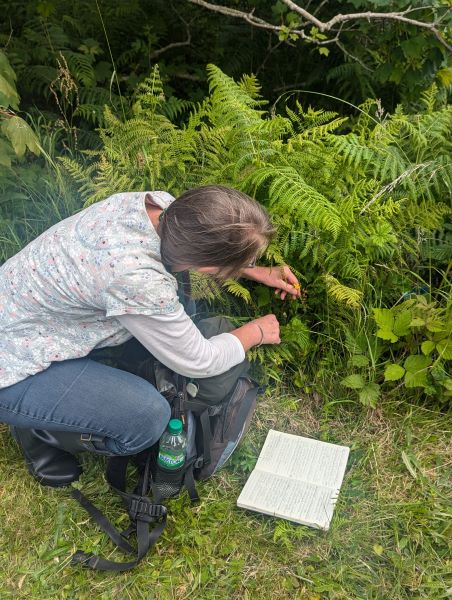
Those who recently attended Michael Philips’ excellent Beginners Botany walk had been advised to start our botany journey by getting to know half a dozen or so plants, and expand our knowledge from there. On our circular walk from Fintry Bay, Helen managed to remember and identify Yorkshire Fog grass (Holcus lanatus), Cock’s-foot grass (Dactylis glomerata), Germander Speedwell (Veronica chamaedrys) with its ‘mohican’ of hairs on only two sides of the stem, and Red Campion (Silene dioica). Other members of the group were willing to share their knowledge, so that she could add a few more species to recognise again in future. Some delicate little pink flowers proved a bit of a puzzle to start with but were shortly identified as Bog Pimpernel (Anagallis tenella). We also identified St John’s Wort, holding up the leaves to see the light shining through their pinprick pattern (we later consulted a wildflower guide and keyed this out to be Slender St John’s Wort (Hypericum pulchrum).

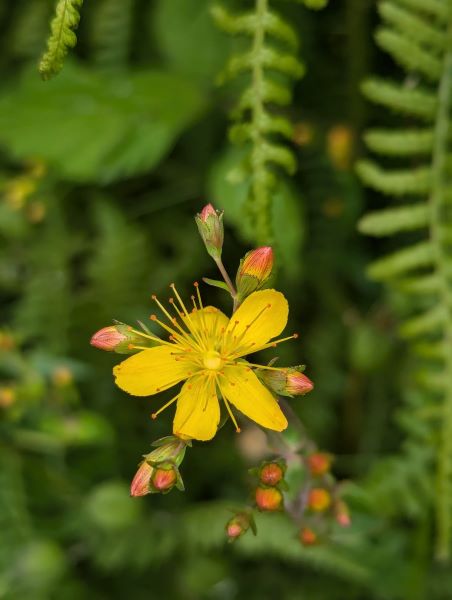
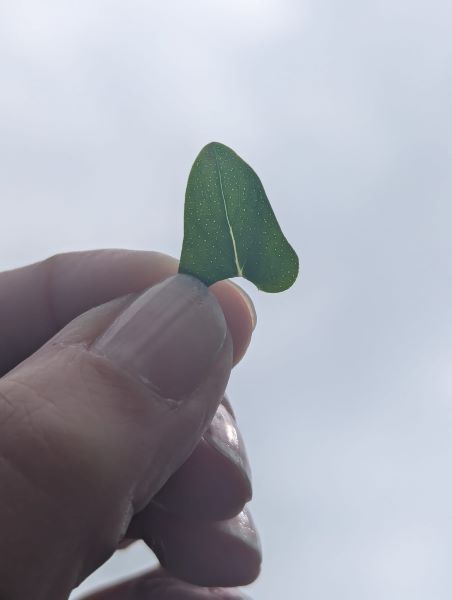
Reaching the Golf Club, we turned and followed the ‘Targets Walk’ downhill to Sheriff’s Port and the coast road back towards Fintry Bay, spotting as we walked several pink-purple Northern Marsh Orchids (Dactylorhiza purpurella) along the verge. We also spotted Bog Myrtle (Myrica gale), known for its antiseptic and midge-repelling properties. Its distinctive sweet smell reminded Hannelie of the Buchu plant (Agathosma crenulate) found in the Western Cape Province in South Africa. Similarly, Buchu has many medicinal properties, notably for the treatment of kidney and urinary tract infections.
Field Studies Centre
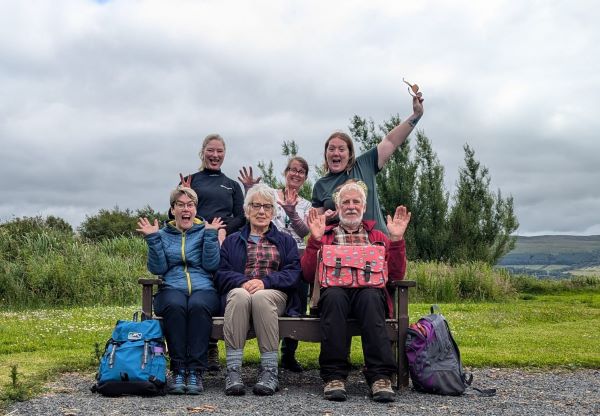
There were seven members on this trip. Five of us stayed in the Field Studies Centre on the edge of Millport, near Farland Point, while Dave and Shelley Mellor stayed in their camper van. The accommodation was great, with student type, en-suite rooms. The food was equally good, with pizza, spanish omelette and salad followed by fruit salad and brioche. In the morning there was an ample cooked breakfast and loads of food for us to make up a packed lunch.
Glow-worms
A couple of hours after dinner, we arranged to meet in the car park of the Field Studies Centre. From here we would then walk to the shore path location where the glow-worms (Lampyris noctiluca) had been found in previous years and do a recce of the ground. This was important, as it would be dark when we returned, so we needed to understand the terrain to keep the group safe. We spent about an hour walking down at the shoreline, and then we headed along the road into Millport to the pub. This was “absolutely necessary”, as we had to wait for it to get dark before we could begin the hunt!

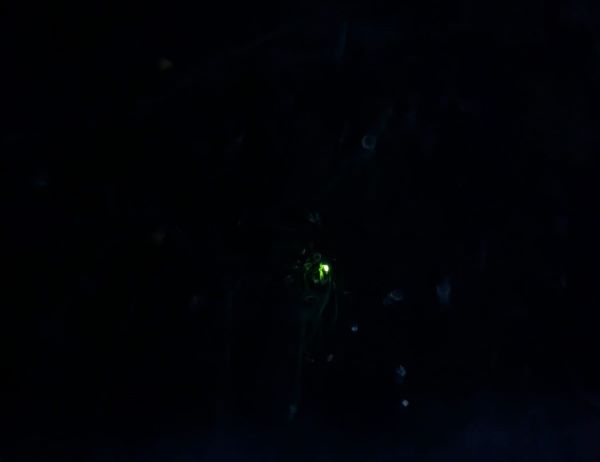
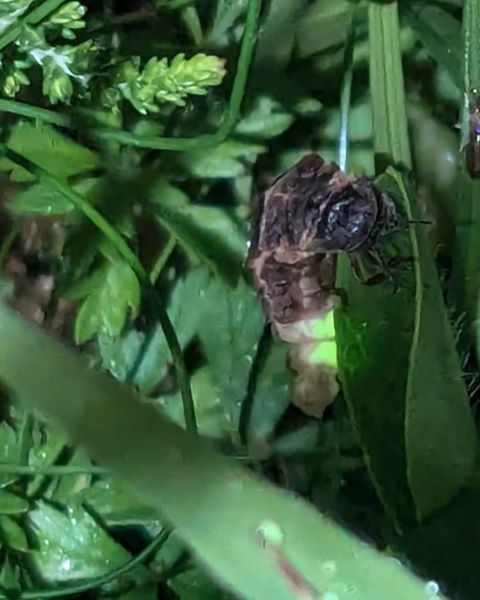
After a couple of refreshments we began the walk back down the road towards the shore path. Whilst walking along the pavement next to the main road, Jem suddenly spotted something small and glowing on the left-hand side of the pavement in the long grass. A Glow-worm?! Could it be?! She got down on her knees for a closer look and shouted to the group that she thought she had possibly found the first Glowworm of the night, and not even at our specified location! We took a few moments to examine it and get some photographs, then continued to the intended location. Once back down at the shore area, we went on to find another eight female Glow-worms dotted along the path side. Kirsty set some lures to try and entice a male down, but sadly we never got to see any males. The females found were logged on iRecord for their location, and some photographs were taken to confirm ID and for our own purposes. We all agreed with Jem’s comment:
“This was an incredible night that I will not forget. The excitement of seeing something I had never seen before, and neither had many others, was brilliant. The 28 hours spent on Cumbrae were jam packed and informative. So glad to have been involved.”
Sunday pre-breakfast activities
Sunday morning was fresh and blue, and perfect for a brisk 10-minute walk around to Kames Bay before breakfast, for an even brisker dip and splash in the sea. Kames Bay has a very gently sloping sandy beach, so it’s easy to stay in your depth, and the water is pretty clear, albeit somewhat bracing – probably around 10℃. Bobbing about taking in a sun-sparkled view of small boats moored beside the Eileans in Newton Bay, with the Sleeping Warrior of north Arran behind, was a fantastic way to wake up after a late night glow-worm spotting. Only Jem and Helen were bold enough to brave the bracing water. For Kirsty and Hannelie, Sunday morning started with a relaxing Qigong session in the grounds of the Field Studies Centre. The ocean views, gentle breeze on your face and bird sounds all around, created the perfect setting for going into a meditative state and appreciating nature. The perfect way to start the day!
Pond dipping
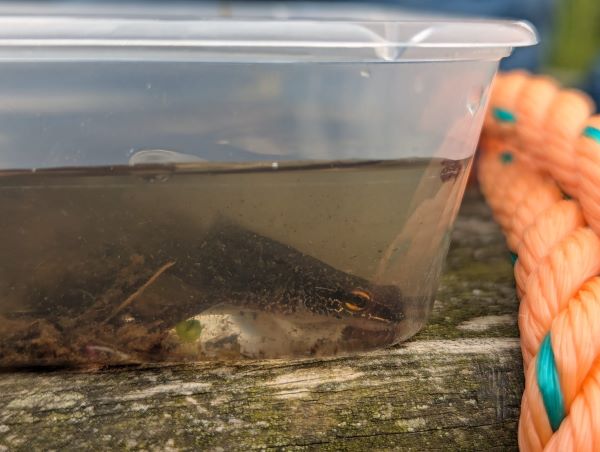
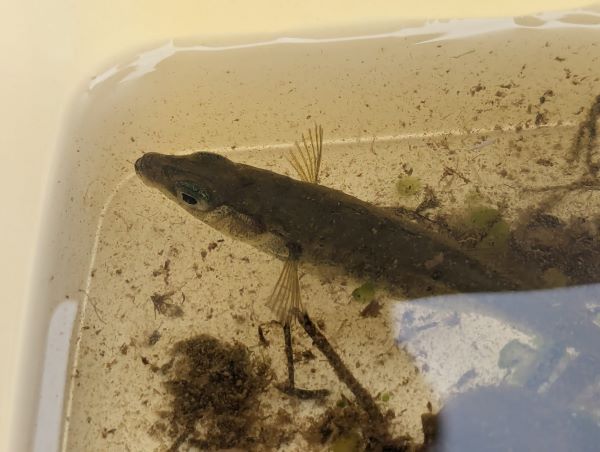
Behind the accommodation block at the Field Studies Centre we discovered a rather overgrown pond. Created several years ago it seems to have been neglected recently. It had dried out to a surprising degree in spite of recent rain but an impromptu dipping session in a small area of the pond, resulted in catches including a stickleback (we couldn’t make out how many spines it had to identify the species), water beetles, water snails, pond skaters, a damselfly larva, three adult male Palmate Newts (Lissotriton helveticus) and a couple of young newts (efts). While we were watching the efts, much to our shock and surprise, the larger of the two proceeded to eat its much smaller relative! We looked for micro-life but there didn’t appear to be anything, such as waterfleas, in the samples we took.
Rocks, salt and lichens
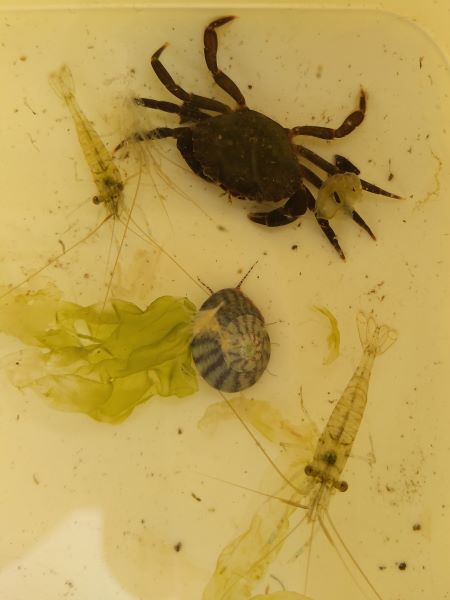
Late morning, after the pond dipping, we made our way to “Pottery Beach”, named so by locals because of the broken glass and pottery/ceramic pieces found there and can keep a person occupied for hours. By this time the tide had started coming back in but we were pleased to find a variety of seaweeds, Common Shore Crabs (Carcinus maenas), red sea anemones, salt-water shrimps and plenty of interesting shells and rocks.
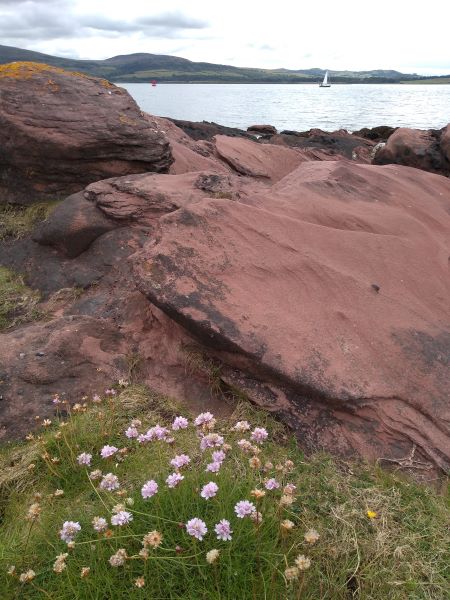
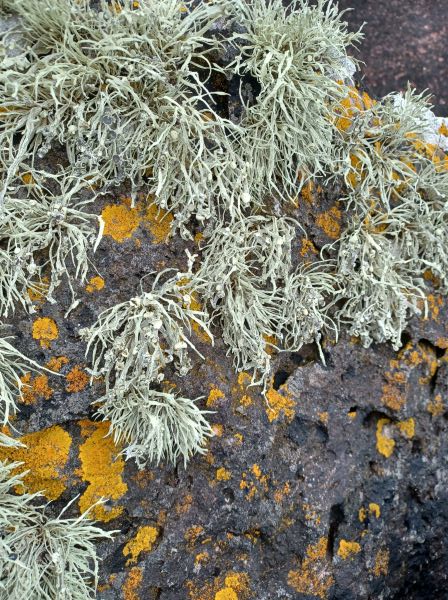
Lichens weren’t top of the list for this weekend but we took some time to look at the shoreline rocks around Farland Point. They display the characteristic colour zonation typical of rocky coasts around the world. The upper area, the ‘grey’ zone is where normal inland species, especially the bushy Ramalina, flourish above the influence of salt spray etc. Lower down, orange coloured lichens create an ‘orange zone’. Further down, in the upper shore zone (periodically covered by water) Verrucaria maura, the (well named) black tar lichen, dominates the ‘black zone’. A few lichens can exist below this where they are covered with seawater twice a day, but these are smooth crustose species. or they are species immersed in the shells of winkles and other shellfish. All in all a tribute to the way in which life can cope with quite severe changes in environment.
The Cumbrae rocks are mainly Sandstones (late Devonian, Early Carboniferous) occasionally cut through by vertical basalt dykes typified by the ‘Lion rock’. On the shoreline the hard volcanic material contrasts with the softer sandstones and this affects the lichen coverage, with longer lived specimens on the harder rocks. The prominent greeny grey bushy Ramalina siliquosa, does well on the harder rocks including some of the large erratic boulders left by the glaciers some 15,000 years ago. On the sandstones, the bright orange Xanthoria parietina and Caloplaca species, the white (big patch forming) Ochrolechia and Pertusaria species all contribute to the colourful spectacle on the sandstones. The neat rosettes of the glossy brown Parmelia glabratula together with the golden brown rosettes of Anaptychia runcinata and many others were there to be seen with a close look. Next time!
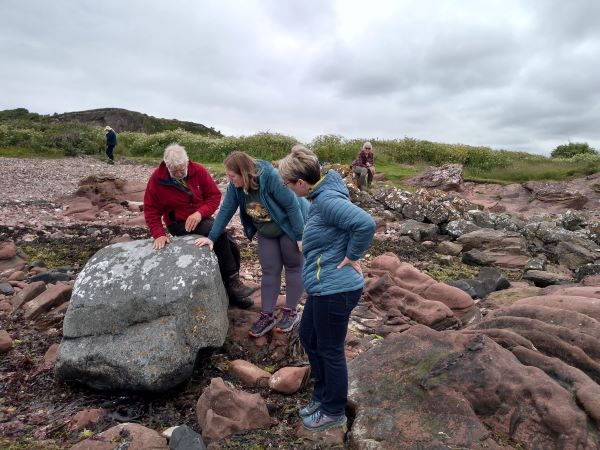
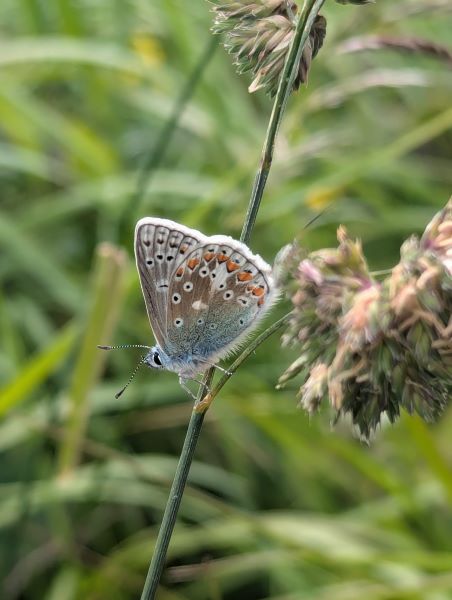
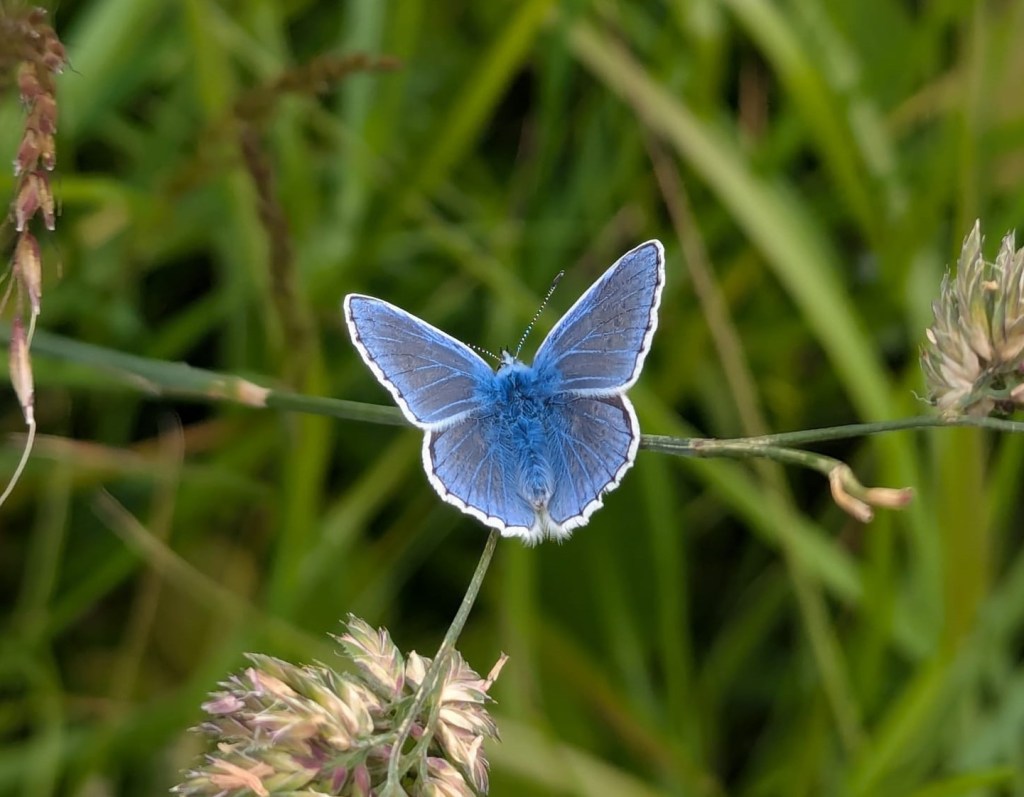
After a few hours of rock-pooling we had lunch on the shore. As we headed back around Farland Point we encountered two Common Blue butterflies (Polyommatus icarus). What amazed us was that one perched on a flower for an extended period, and we were able to take some beautiful close-up photographs. Meanwhile Shelley had remained at the camper van where she had been treated to fabulous views of a seal, very close to shore eating an enormous white fish.
Standing stone and viewpoint
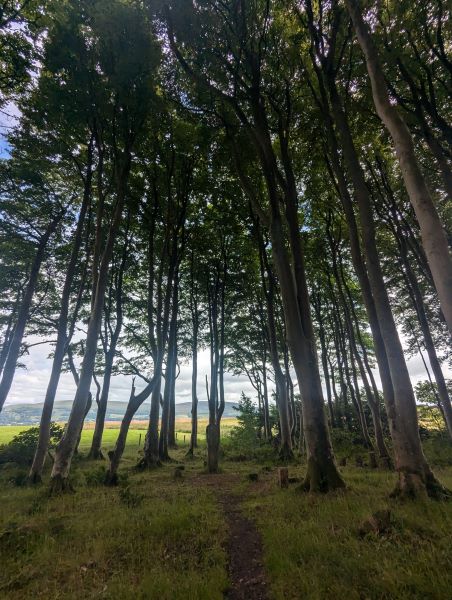
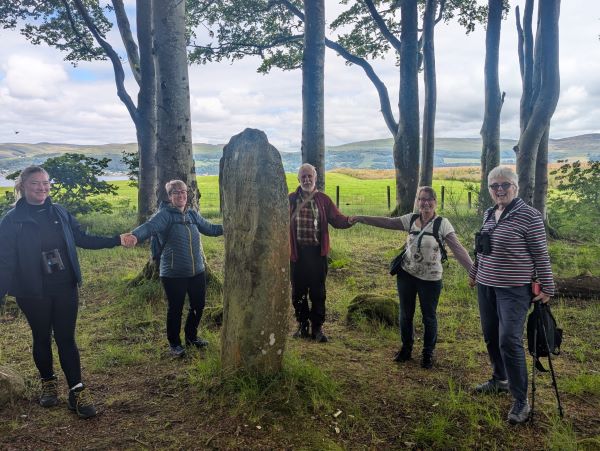
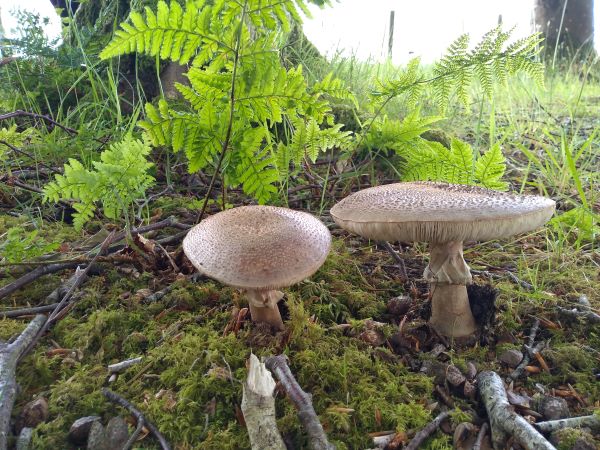
For our next activity we headed by car to the northern side of Farland Hill for a walk through Gouklan Wood to see the island’s only existing pre-historic standing stone. The mixed broadleaf woodland provided welcoming dappled shade as we wandered along the path filled with ferns, Honeysuckle, Red Campion and other woodland plants. The path then passed through a striking plantation with very tall narrow Beech trees, at the base of which we spotted some interesting fungi. As we were warned by signs at the start of the walk, we did not pick any, but only took photos. It was here that we found the standing stone. Anyone watching might have been mistaken for thinking that we were a group of druids rather than wildlife worshippers, as we all held hands in a ring round the stone to celebrate the fantastic company and fascinating wildlife of the weekend.
Our time on the island was nearly at an end but we wanted to end on a ‘high’ so, on the way to the ferry made a brief detour to the highest point. While appreciating the fabulous 360° views, we became aware of a drama unfolding before us. There were about six Ravens (Corvus corax) taking turns to edge in on the areas where Oystercatchers (Haematopus ostralegus) were nesting. At each ingress the Oystercatchers would chase them off with their characteristic high pitched ‘peep-ing’. At one point about a dozen Oystercatchers joined in to protect the other’s chicks from the Ravens but, just as we were leaving, one Raven was successful in carrying a chick away in its beak.
And with that dramatic ending our weekend was over.
Report by Hannelie Coetzee, Jemma Craig, Judy Hayton, Dave Mellor, Shelley Mellor, Kirsty Menzies, Helen Spiers
Photographs by Jemma Craig, Dave Mellor, Shelley Mellor, Kirsty Menzies and Helen Spiers
 Paisley Natural History Society
looks like you had a really successful trip. Well done everyone, the photos are fantastic too!
LikeLike
Thanks Kirsten. It was a fabulous weekend and we had a great time. The glow-worms were amazing to see and were totally the highlight but there was lots of other interesting wildlife too.
LikeLike