
A group of 7 members gathered for this evening walk on 5th June, to learn about botany in the grassland adjacent to South Avenue, Paisley. It was led by Michael Philip, Vice-county Co-recorder for Lanarkshire (vc77) and co-ordinator of the Renfrewshire Vice-county (vc76) Botany Network.
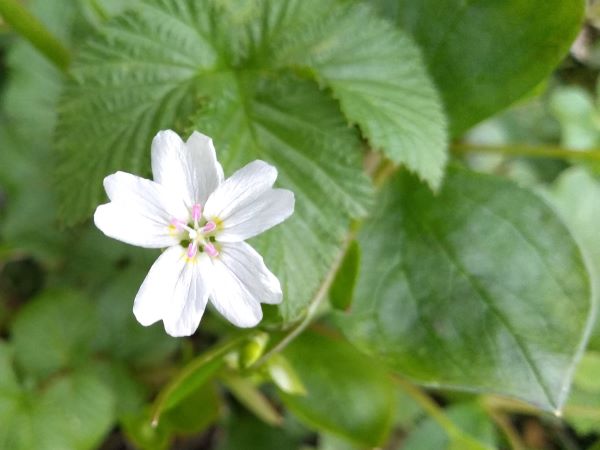
Rather than repeat the same route as last year, we headed straight along the path, through a wooded area, where we spotted flowering Germander Speedwell (Veronica chamaedrys), Pignut (Conopodium majus), Herb Robert (Geranium robertianum), Field Forget-Me-Not (Myosotis arvensis) and Pink Purslane (Claytonia sibirica) adding spots of colour within the dappled shade. As always, Michael had lots of fascinating information about the plants and identification tips to share. Field Forget-Me-Not is a hairy plant with mid-sized flowers that emerge in a ‘mexican wave’ ie one flower after the other. It also has hooked hairs underneath the flower. Red Campion (Silene dioica) was also in full flower, but if we had come later in the season when flowering had finished, we could have distinguished it from White Campion. As Michael explained, the teeth on the seed capsule in Red Campion roll right back on themselves, whereas in White Campion they face forward.

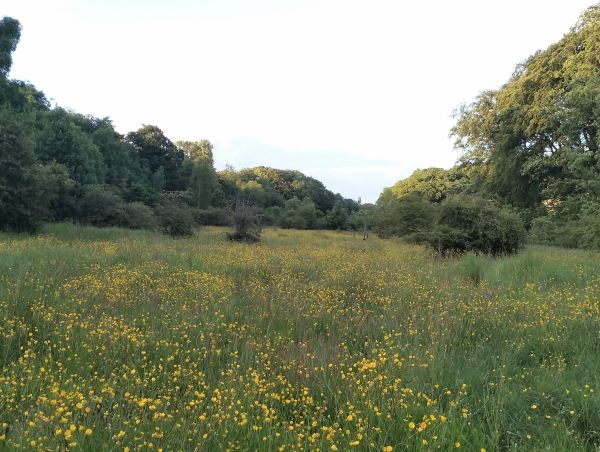
The woodland then opened out into a meadow area with a profusion of buttercup flowers where we learned some of the distinguishing features between the two most common species. Meadow Buttercup (Ranunculus acris) has deeply cut leaves and plants tend to be taller compared to the Creeping Buttercup (Ranunculus repens) where the leaves are usually divided into 3 leaf lobes.
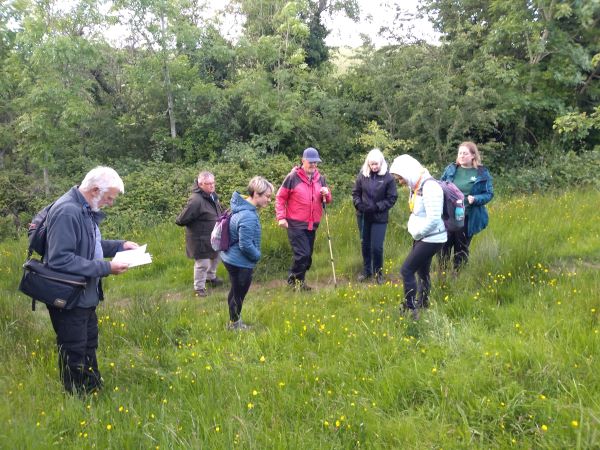
In this area Michael also covered some of the more tricky plants, quoting the saying ‘sedges have edges and rushes are round and grasses have nodes right down to the ground’ to help us remember the difference between the three groups. The most common rush we spotted was Smooth Rush (Juncus effusus) but we also saw the rather similar Compact Rush (Juncus conglomeratus). Being rushes they both have round stems but we learned that the Compact Rush has vertical ridges running the length of the stem and the bit above the flower, the bract, leans at a slight angle towards the flower. We also found Slender Rush (Juncus tenuis) growing out of the trodden path. In the wetter areas we found Oval Sedge (Carex leporina) and sure enough, it had triangular stems giving it ‘edges’. There were a multitude of grasses to be seen and Michael explained how some of these can be recognised by their ‘jizz’. Such as, Spreading Meadow-grass (Poa humilis) which grows in a dense patch with a mass of purply flowers about shin height. Or Creeping Soft-grass (Holcus mollis) which also grows in dense patches and has light green upright leaves. You can check the ID on these by looking at their ‘hairy knees’, the nodes along the stems.
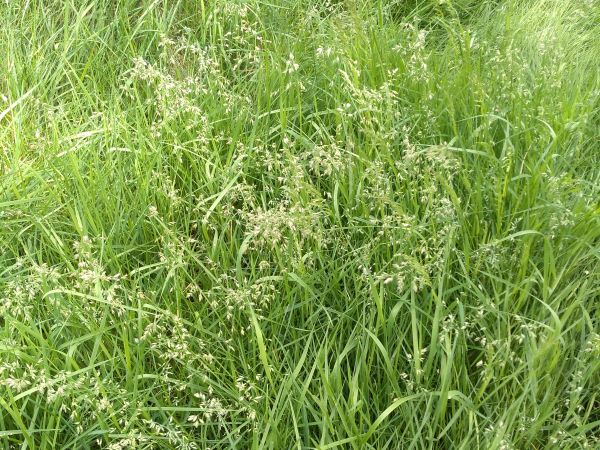
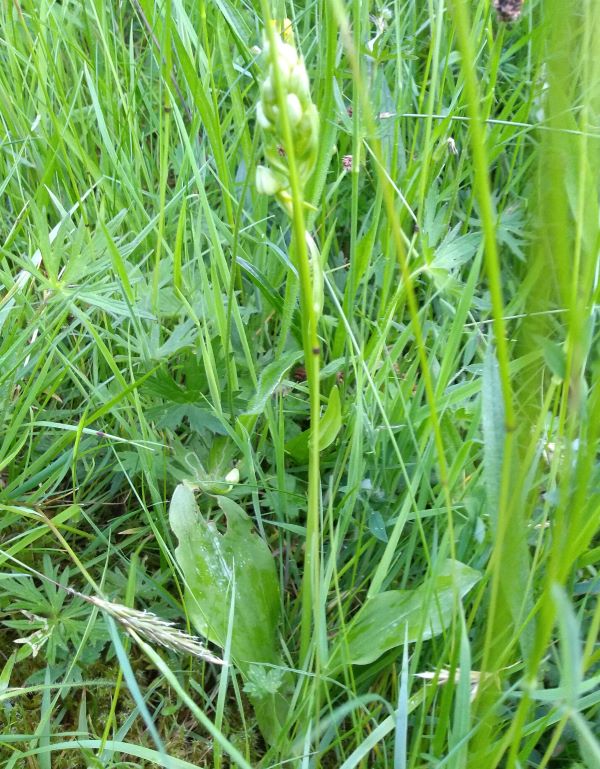
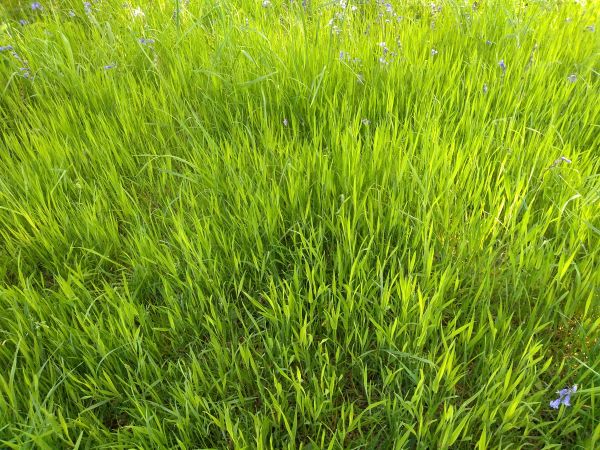

We also saw Soft Brome (Bromus hordeaceus), Perennial Rye Grass (Lolium perenne), Marsh Foxtail (Alopecurus geniculatus) and Meadow Foxtail (Alopecurus pratensis). Amongst all of these we found a few orchids, Common Spotted Orchids (Dactylorhiza fuchsii) and Greater Butterfly Orchid (Platanthera chlorantha) but disappointingly these were not yet in full flower.
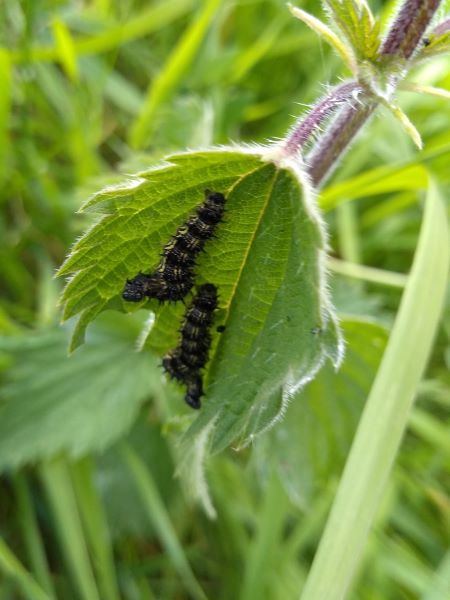
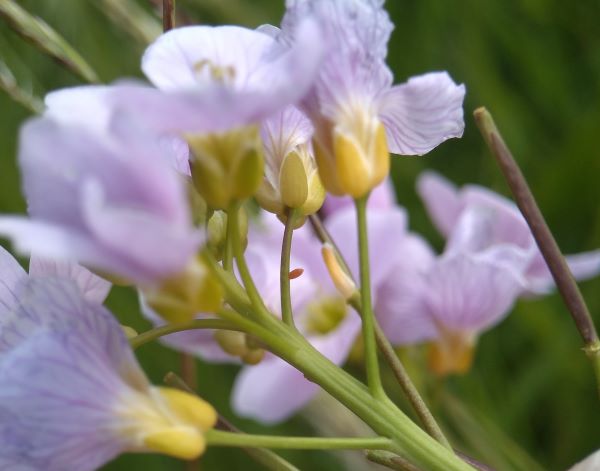
But it wasn’t all about botany, we did manage to slip some butterfly sightings into the evening. While examining a patch of Common Nettle (Urtica dioica) we found a number of Small Tortoiseshell caterpillars (Aglais urticae) and on close examination of Lady’s Smock (Cardamine pratensis) flowers, an Orange Tip butterfly (Anthocharis cardamines) egg.
It was starting to turn a bit chilly so we headed back to our cars where, like last year, Michael finished up the excellent evening with a quick grass revision session.
Report and photographs by Kirsty Menzies
 Paisley Natural History Society