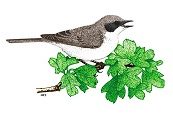

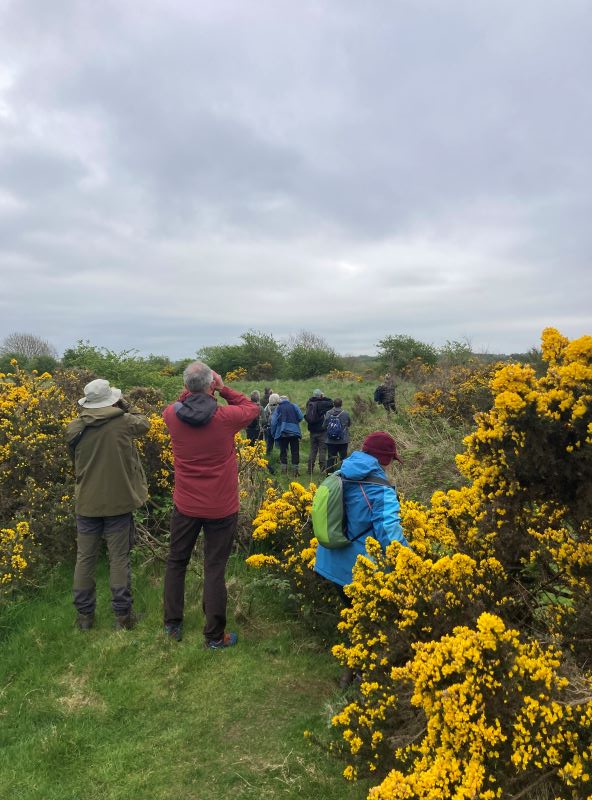
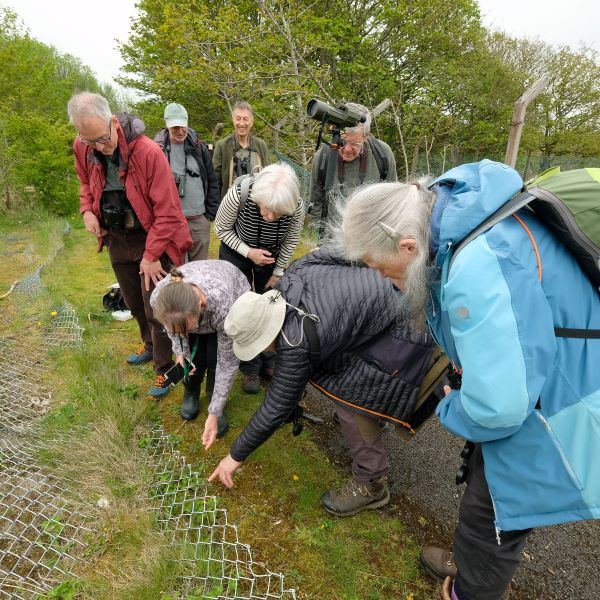
Around 13 members from the Paisley Natural History Society, Glasgow Natural History Society and interested delegates from the recent Scottish Ornithologists Club/ British Trust for Ornithology conference arrived at Broom Farm for 11.00 am on Saturday 4th May, to walk about in the extensive brownfield site at Ardeer, looking in particular for the rare Lesser Whitethroat.
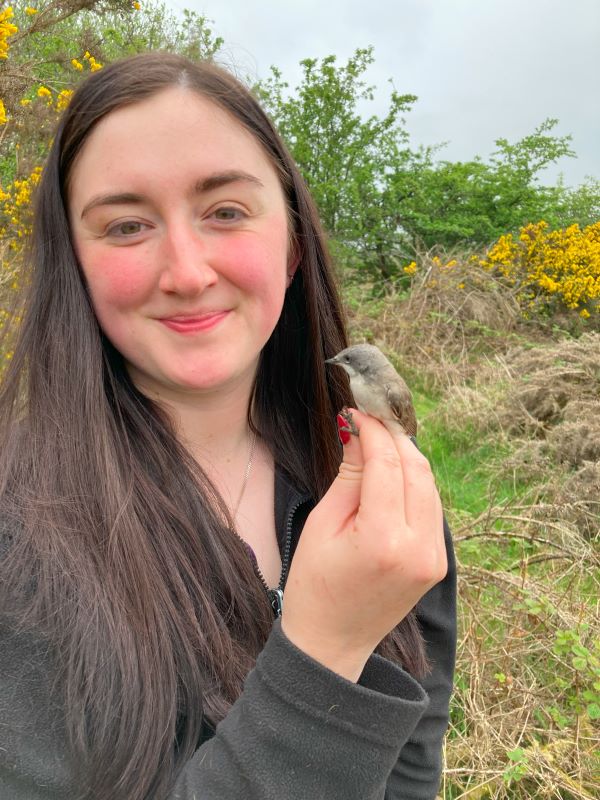
I had arranged to meet up with fellow bird ringer Rebecca Dickson at 7.00am to try and ring in the most accessible Lesser Whitethroat territory in an attempt to catch the male. After setting up the 60 foot mist net, I played a recording of a singing Lesser Whitethroat which acts as a tape lure, hopefully to entice the male to fly towards this “rival male” and become trapped in the net. After one minute the male had indeed been trapped, was quickly ringed, biometrics taken, photographed and then released.
Over the next few hours, we had also ringed a pair of Blackcaps, a Willow Warbler and a Common Whitethroat – an indication of the diversity of warblers on this site. After packing up the net, a happy Rebecca headed off home and I led the group back into Ardeer. Our party then had brief glimpses of the ringed Lesser Whitethroat patrolling through the open Hawthorn scrub, singing and feeding high up in the canopy. There were five active Lesser Whitethroat territories this year in Ardeer and our party managed to see another two territories. Including one which had a displaying breeding pair, which put on a rarely seen display chase, involving the male frantically chasing the female around in circles through the hawthorn canopy.

We then intrepidly crossed over the wide River Garnock, making sure our members were safely escorted over to the other side. Here the habitat was much more aquatic in nature, with extensive Common Bulrush reed beds. By late morning, the cloud cover soon dispersed and the sun came out. This flat area of open water, reed beds and scrub covered raised embankments hosted large numbers of singing Sedge Warblers, Willow Warblers, Grasshopper Warblers, Common Whitethroats, Blackcaps and Reed Buntings. In the increasing warmth, good numbers of Large Red Damselflies took to the wing, along with small numbers of Orange-tip Butterfly.

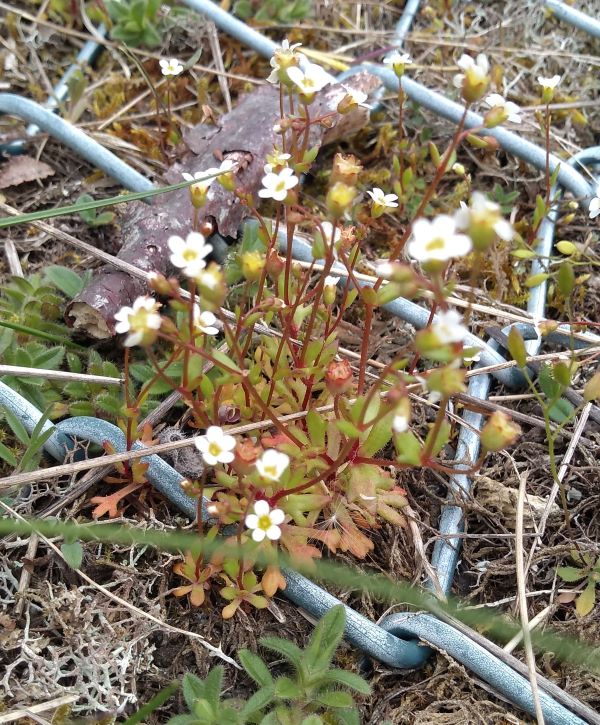
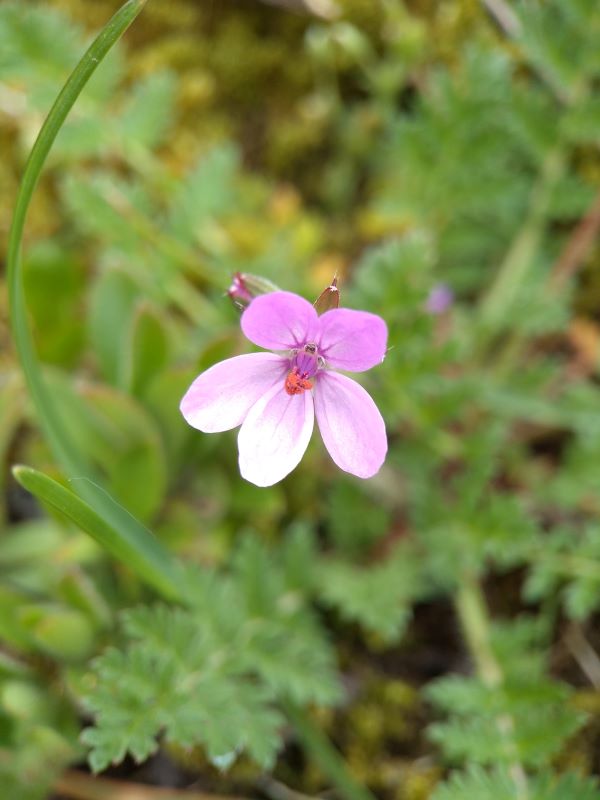
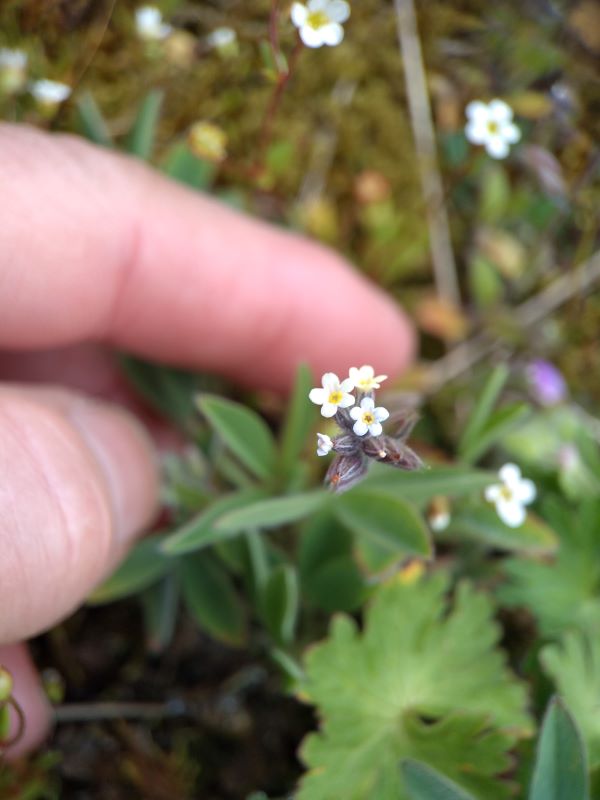
Walking along the raised embankment, we came upon the last Lesser Whitethroat territory in our circuit. This singing male gave really close views in amongst the dense bramble & gorse banks, an indication of a potential nest site. We also had a singing Garden Warbler here, which is our rarest breeding warbler from the eight species recorded in Ardeer. By the River Garnock we were also treated to three displaying Common Sandpipers and a lucky few had a brief glimpse of a Kingfisher darting upriver. By the bridge we encountered a few interesting plant species, which included Rue-leaved Saxifrage, Changing Forget-me-not, Common Stork’s-bill and Dove’s-foot Cranesbill.
Walking back in a circular path back through the old derelict ammunition buildings we saw several Sand Martins prospecting around the sand filled blast walls and a soaring Sparrow-hawk amongst a pair of displaying Buzzards. Walking back through the site, our party could see the terrible devastation brought about in clearing 16.8 hectares of emergent scrub for future development and how devoid of bird life this site had now become. Hopefully by the end of this summer we will find out if NatureScot will designate Ardeer as a Site of Special Scientific Interest and safeguard one of Scotland’s most biodiverse sites in the country.

Report by Tom Byars (photographs by Tom Byars, Mike Wigg, Marcus Coetzee and Kirsty Menzies)
Bird list of species seen and heard:
Little Grebe, Cormorant, Grey Heron, Canada Goose, Mute Swan, Mallard, Goldeneye, Goosander, Sparrowhawk, Buzzard, Pheasant, Water Rail, Moorhen, Coot, Oystercatcher, Red-shank, Curlew, Snipe, Black-headed Gull, Lesser Black-backed Gull, Herring Gull, Great Black-backed Gull, Common Gull, Wood Pigeon, Kingfisher, Skylark, Sand Martin, Swallow , Meadow Pipit, Pied Wagtail, Wren, Dunnock, Grasshopper Warbler, Sedge Warbler, Garden Warbler, Blackcap, Whitethroat, Lesser Whitethroat, Willow Warbler, Chiffchaff, Goldcrest, Robin, Blackbird, Song Thrush, Coal Tit, Blue Tit, Great Tit, Reed Bunting, Chaffinch, Greenfinch, Siskin, Goldfinch, Linnet, Lesser Redpoll, Bullfinch, House Sparrow, Starling, Magpie, Jackdaw, Rook, Carrion Crow.
You can download a printable pdf of the report here.
 Paisley Natural History Society